Published
Nagarjuna was unhappy with his own movies. So he chased Mani Ratnam on his morning walks
Before Geethanjali made him a romantic icon, Nagarjuna says he spent about a month persuading Mani Ratnam to work with him. The career turn began with dissatisfaction, not a box-office plan.
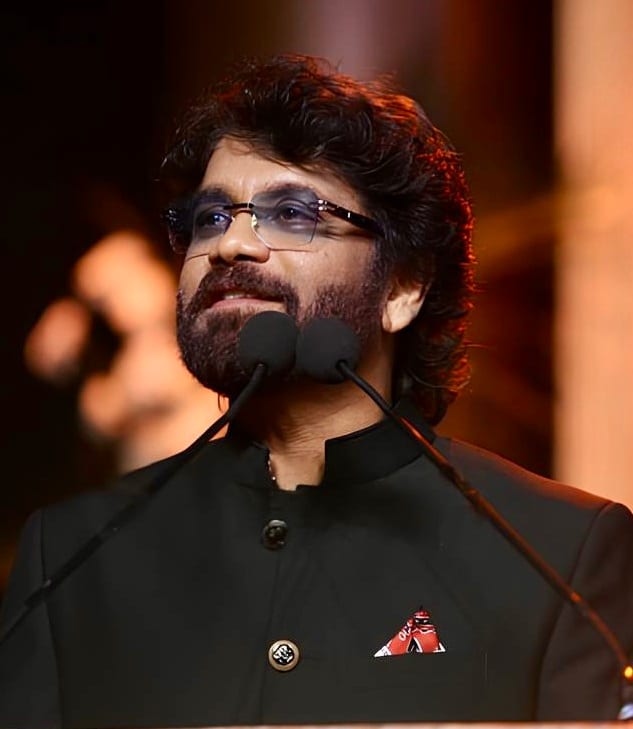
Nagarjuna has said that, early in his career, he was unhappy with the films he was making.
His solution was unusually literal.
After watching Mani Ratnam’s Mouna Ragam, Nagarjuna decided he wanted the director to make a film with him. He learned that Ratnam took morning walks in Chennai’s Poes Garden and began showing up.
Nagarjuna later recalled pursuing him for about a month.
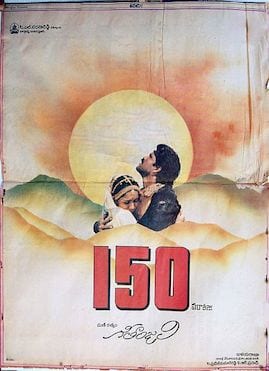
The result was Geethanjali.
Released in 1989, the tragic romance became a commercial success, ran for more than 100 days and helped turn Nagarjuna from “ANR’s son who acts” into a romantic star with an identity audiences associated with him.
That is a career story built not around being discovered, but around an actor deciding he disliked the path he was already on.
The early films had worked without satisfying him
Nagarjuna’s own retrospective account is unusually unsentimental.
He said his 1986 debut Vikram worked partly because people were curious to see how Akkineni Nageswara Rao’s son would perform. He described several subsequent films as things he had done without yet finding the work he wanted.
Aakhari Poratam gave him a significant mass-audience break.
But he still wanted something else.
That distinction matters in a career story.
Commercial progress and creative satisfaction do not always arrive together.
He pursued a director, not a formula
Nagarjuna’s fascination with Mouna Ragam was not based on a role that obviously resembled his existing films.
He believed Ratnam could bring out a different side of him.
According to his 2025 account, the morning-walk campaign lasted roughly a month, with short conversations until Ratnam eventually agreed.
Genesis does contain Nagarjuna and a Geethanjali movie entity, which gives Chitram a clean structured spine for the career relationship.
The movie changed what Nagarjuna could be
Geethanjali follows two young people facing terminal illness, but it refuses to behave like a solemn prestige exercise for most of its running time.
Romance, mischief, landscape and Ilaiyaraaja’s music give the tragedy its emotional contrast.
The Indian Express’s 2023 Nagarjuna retrospective describes 1989 as the year of his complete transformation: Geethanjali made him a romantic icon, while Siva later established an action identity.
That pairing is important.
Geethanjali did not lock Nagarjuna into romance.
It gave him one clear identity just before another film proved he could carry its opposite.
The 100-day run turned an experiment into market evidence
Hindustan Times reported that Geethanjali ran for more than 100 days and became both a commercial hit and a cult film.
There is no need to invent a rupee gross for a period where reliable historical box-office accounting is difficult.
The run length is enough to establish that this was not simply a film critics rediscovered decades later.
Audiences responded in its own time.
That response made the risk legible to an industry that had initially known Nagarjuna partly through lineage.
The co-star remembers a director who made performance feel specific
Girija Shettar, who played Geethanjali, later told The Indian Express that Ratnam’s dialogue and direction felt character-specific and unusually intuitive for an actor.
Her account adds something Nagarjuna’s story cannot provide on its own: the working environment that produced the change.
The director Nagarjuna had chased was not simply a prestigious name.
His method altered how the actors inhabited the romance.
“Career turning point” is overused. This one has a mechanism.
Many successful films are retroactively declared turning points because the next films also did well.
Geethanjali has a clearer chain.
Nagarjuna says he was dissatisfied.
He identified the filmmaker he believed could reveal a different version of him.
He actively pursued that collaboration.
The resulting film ran for more than 100 days and changed his image.
The same year, Siva pushed the transformation in another direction.
For Chitram, that makes Geethanjali a useful star-career article because the agency belongs to the star before the success arrives.
Nagarjuna did not wait for the right script to find him.
He went for a walk until the director stopped saying no.
The same year prevented the new image from becoming a cage
Geethanjali’s romantic success might have encouraged Nagarjuna to repeat the same emotional register immediately.
Instead, Siva arrived in the same year and pushed him toward a very different kind of screen identity. That sequence is part of why 1989 looms so large in retrospectives of his career: the romantic image was established strongly enough to matter, but it was not the only image audiences were asked to accept.
The reinvention widened his options rather than narrowing them.
In the database
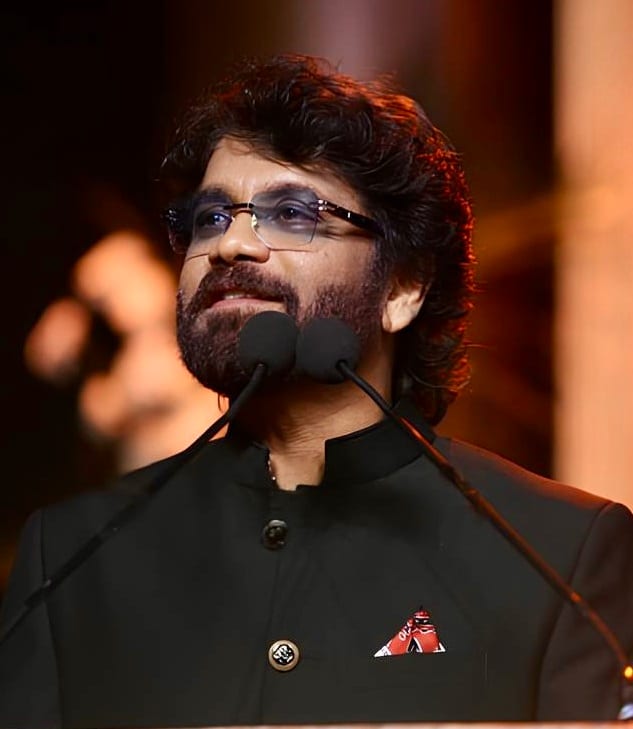
Nagarjuna
Subject of this story


Subject of this story
Source evidence
Hindustan Times
Retrieved 14 September 2026 · original observation preserved
Source evidence
The Indian Express
Retrieved 14 September 2026 · original observation preserved
Source evidence
The Indian Express
Retrieved 14 September 2026 · original observation preserved
Source evidence
Wikipedia
Retrieved 14 September 2026 · original observation preserved
Image provenance
Bollywood HungamaPublication eligibility is controlled by its recorded rights decision.