Published
Krack was a comeback for Ravi Teja — and a test for theatres too
Ravi Teja arrived after a string of underperformers; theatres were operating under pandemic restrictions. Krack broke both kinds of pessimism and became one of early 2021’s theatrical confidence boosters.
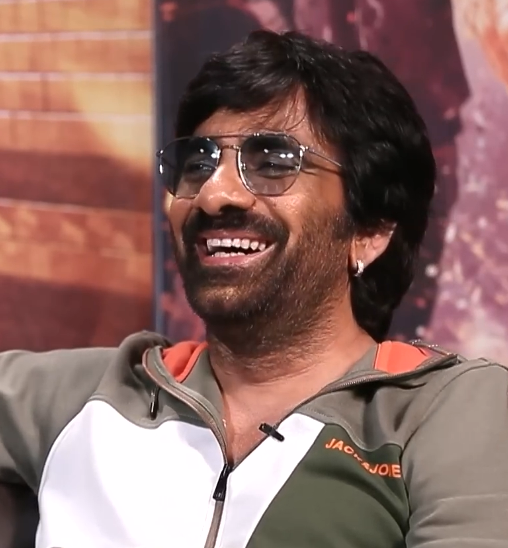
Krack had to prove two things at once.
Ravi Teja needed a clean theatrical win after a run of underperforming films. Telugu theatres, emerging from months of pandemic disruption, needed evidence that audiences would still turn up for a major commercial release.
The same movie ended up answering both questions.
Released for Sankranti in January 2021, Krack became Ravi Teja’s third collaboration with director Gopichand Malineni and reunited him with Shruti Haasan. Chitram’s Genesis Data links all three to the film.
The larger context is what makes the success more than another hit in a long filmography.
Ravi Teja was coming off a difficult stretch
A later Hindustan Times retrospective summarized the period bluntly: Touch Chesi Chudu, Nela Ticket, Amar Akbar Anthony and Disco Raja had failed to leave a mark before Krack “redeemed” him commercially.
Genesis contains each of those Ravi Teja credits, which means the career sequence is visible without needing Chitram to invent a slump narrative from memory.
Krack then returned him to one of his most familiar commercial modes: the aggressive police character.
In a pre-release Indian Express interview, Ravi Teja acknowledged the long shadow of Vikramarkudu over his police roles but treated Krack’s character as separate. The familiarity was not accidental. The comeback did not depend on radically changing what audiences expected from him.
It depended on delivering that expectation effectively again.
The release itself was a risk
Krack was also one of the first major Telugu releases after the long 2020 theatrical shutdown.
The Indian Express later described it as a confidence boost for southern exhibitors and producers. According to that retrospective, the film grossed more than ₹12 crore worldwide on opening day and more than ₹70 crore across its theatrical run, with theatres operating under a 50 percent occupancy cap.
Those are publication-reported figures, not Genesis box-office claims. Genesis does not currently carry a structured Krack gross.
The same source said the film generated a reported ₹40 crore net profit for investors. That too should remain explicitly attributed to the publication’s retrospective reporting.
Even opening day did not go smoothly
The comeback almost began with a different kind of failure.
Director Gopichand Malineni told Cinema Express that financial disputes involving the producer and financiers delayed Krack’s scheduled opening-day shows in more than 1,000 theatres worldwide. He said he had been determined to hold the film for theatres rather than move it to streaming.
The dispute was resolved and screenings began later.
That episode matters because it shows how fragile the theatrical bet was. The film was not simply dropped into a normal market and rewarded by routine star demand.
It arrived after a shutdown, under capacity restrictions, with an opening-day financing problem — and still became a hit.
Ravi Teja’s comeback and the market recovery overlapped
By April 2021, The Indian Express grouped Krack with films such as Master and Vakeel Saab as titles that had helped restore confidence in theatrical business in southern India.
That does not mean Krack single-handedly “saved theatres.” The recovery was broader and depended on many films, changing public-health restrictions and audience behavior.
But the movie became one of the early pieces of evidence that a mass Telugu entertainer could still generate meaningful theatrical business during that transition.
For Ravi Teja, the commercial result had a more personal consequence.
After a sequence of disappointments, he again had a film whose success was large enough to reset how the next phase of his career was discussed.
The useful career claim is modest
It would be easy to make the story more dramatic than the evidence supports — to say Krack resurrected a dead career or permanently solved Ravi Teja’s box-office problems.
His later filmography shows why that would be too neat. Successes and failures continued.
What Krack clearly did was break a losing stretch.
It gave Ravi Teja a major hit, restored demand for a commercial persona audiences already knew, and did so at a moment when theatrical exhibition itself was operating under unusual uncertainty.
That overlap is why Krack is a career story rather than only a box-office line.
The actor needed a comeback.
Theatres needed a crowd.
For one Sankranti release, both got what they were looking for.
In the database
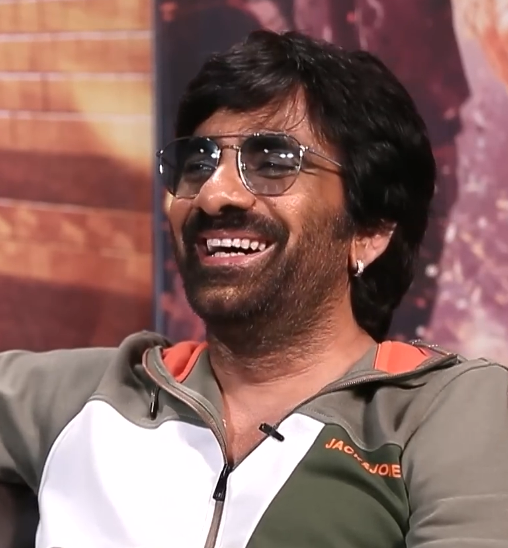
Ravi Teja
Subject of this story
Gopichand Malineni
Mentioned in this story

Shruti Haasan
Mentioned in this story
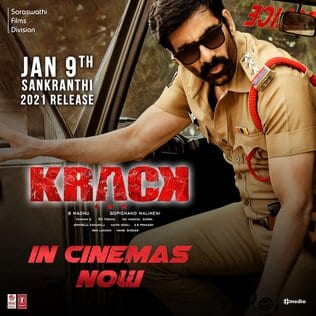
Subject of this story

Mentioned in this story
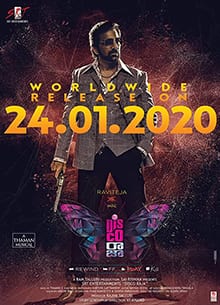
Mentioned in this story

Mentioned in this story

.png)
.jpg)
![[1]](https://en.wikipedia.org/wiki/File:Krack_film_poster.jpg)


Mentioned in this story
Source evidence
Cinema Express
Retrieved 14 September 2026 · original observation preserved
Source evidence
Hindustan Times
Retrieved 14 September 2026 · original observation preserved
Source evidence
The Indian Express
Retrieved 14 September 2026 · original observation preserved
Source evidence
The Indian Express
Retrieved 14 September 2026 · original observation preserved
Source evidence
Wikipedia
Retrieved 14 September 2026 · original observation preserved
Source evidence
Wikipedia
Retrieved 14 September 2026 · original observation preserved
Source evidence
Wikipedia
Retrieved 14 September 2026 · original observation preserved
Image provenance
People Media FactoryPublication eligibility is controlled by its recorded rights decision.