Published
How do you direct a hero who is not on set? Rajamouli’s Eega problem
Eega’s premise was simple: a murdered man returns as a fly. Making the fly behave like a lead actor forced Rajamouli and his crew to rebuild how they shot, edited and reacted to a protagonist that did not physically exist.
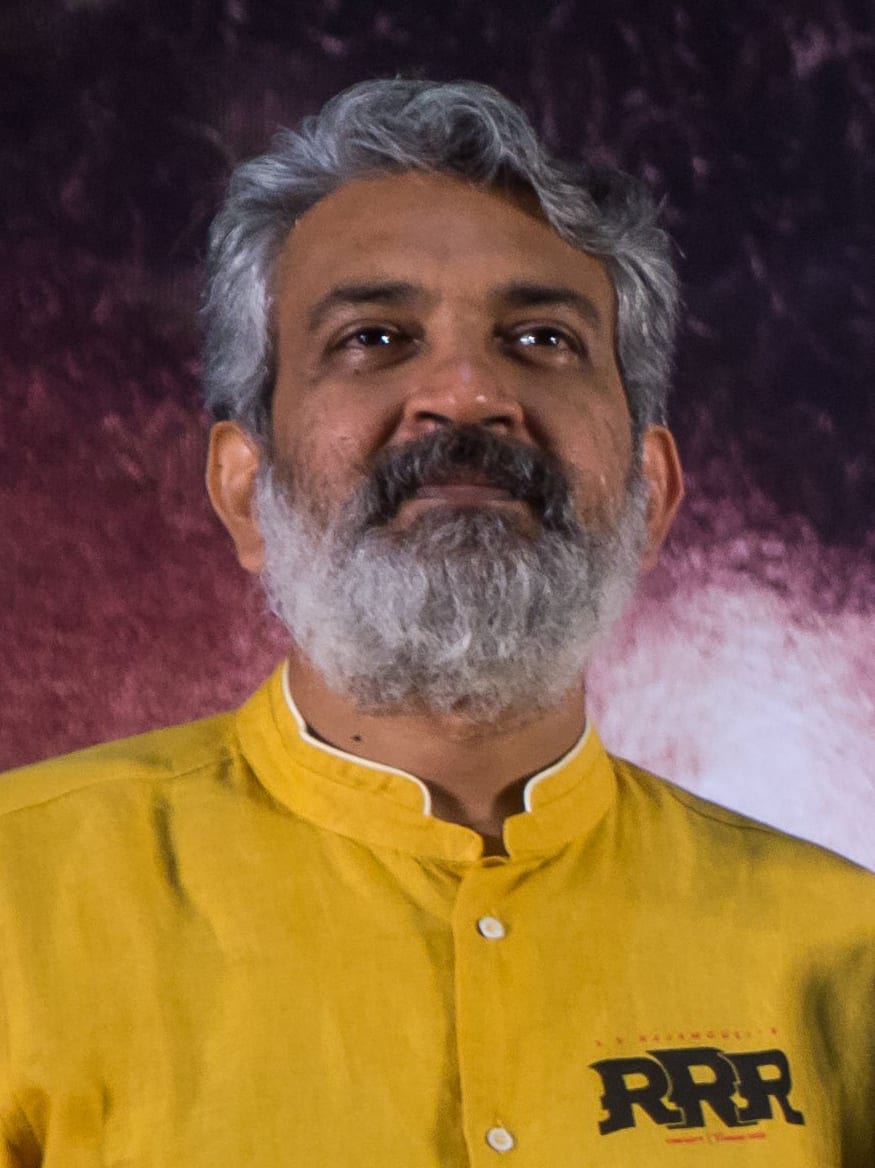
Rajamouli had already made large, star-driven Telugu hits when he chose a protagonist that could not speak, emote with a human face or physically exist on set.
A housefly.
Eega is now easy to describe because the finished film proved the premise could work. In production, the problem was much less comfortable: actors, cinematographer, editor, composer and effects teams had to build scenes around a character that was mostly absent during principal photography.
Rajamouli later called Eega the most difficult film of his career at that point.
That difficulty is the editorial angle Chitram should preserve.
Genesis gives the clean skeleton
Chitram’s Genesis Data records Eega as a 2012 film, with Nani and Samantha Ruth Prabhu acting and S. S. Rajamouli directing. It also preserves the alternate title Naan Ee.
That is the database layer: one movie entity, stable people relationships, an alias, and filmography provenance.
The making-of story explains why the row is unusual.
In a July 2012 Rediff interview after the film’s success, Rajamouli described the challenge of shooting scenes before the finished fly existed. The cast and crew had to imagine what the animated character would eventually do. Early edits could not fully communicate the intended action because the final animation was missing. That uncertainty also affected scoring and other downstream work.
In other words, the film was not simply “VFX-heavy.” Its central performance was structurally incomplete through much of production.
The idea began as a simple revenge story
In another 2012 interview, Rajamouli traced the seed of the premise to a story told by his father, writer V. Vijayendra Prasad: a boy is killed by a villain and returns as a fly.
Rajamouli said he wanted the finished film to have the simplicity of a bedtime story.
That combination — simple narrative, difficult execution — is what makes Eega more interesting than a list of visual-effects trivia.
The story had to remain immediately legible because the technical apparatus could not be allowed to become the point. A murdered man returns as a fly and wants revenge. The audience understands the engine in seconds.
The difficulty was making the fly feel like the same dramatic character.
The fly could not look completely real or completely cute
Rajamouli described a design problem that sits between visual effects and performance. A real fly becomes unpleasant in extreme close-up. But changing it too far would turn the protagonist into a cartoon and weaken the physical reality of the film.
He also said the fly needed to inherit recognizable qualities from Nani’s human character even though the insect itself could not deliver facial expressions like an actor.
That placed unusual weight on the antagonist’s reactions. Sudeep, who played the villain, described acting opposite something that was not physically present on set. In a separate contemporary interview, he explained that his reactions had to help the audience understand what the invisible fly was doing.
The cinematography had to invent its own reference library
Cinematographer K. K. Senthil Kumar told Rediff that the crew carried out close study of an actual housefly and used macro photography techniques because there were few useful live-action references for what they were attempting.
He described the production as requiring the team to “unlearn” familiar methods and develop a new visual grammar around the scale of the protagonist.
Again, Chitram does not need to turn every anecdote into a technical record. The durable claim is that the film’s camera and VFX planning were organized around the physical scale and absence of the fly.
Why this is a filmmaking story
Rajamouli’s later films made scale one of the obvious signatures attached to his name. Eega is useful because it shows a different kind of scale: not thousands of extras or giant sets, but the discipline required to make a tiny protagonist readable.
The film also sits in Genesis before Baahubali and RRR, giving Chitram a way to connect the director’s later global-scale reputation to an earlier experiment in visual storytelling.
The point is not that Eega was a “stepping stone” that inevitably led to those films. Careers are rarely that neat.
The more defensible observation is that Rajamouli was already treating technical difficulty as a storytelling problem rather than a decorative layer. He chose a premise that removed the ordinary tools of a star performance and then rebuilt those tools through animation, camera scale, sound, editing and the villain’s reactions.
That is a director story, not a trivia story — and it is exactly the kind of history the Genesis editorial layer should make easy to wander into.
In the database
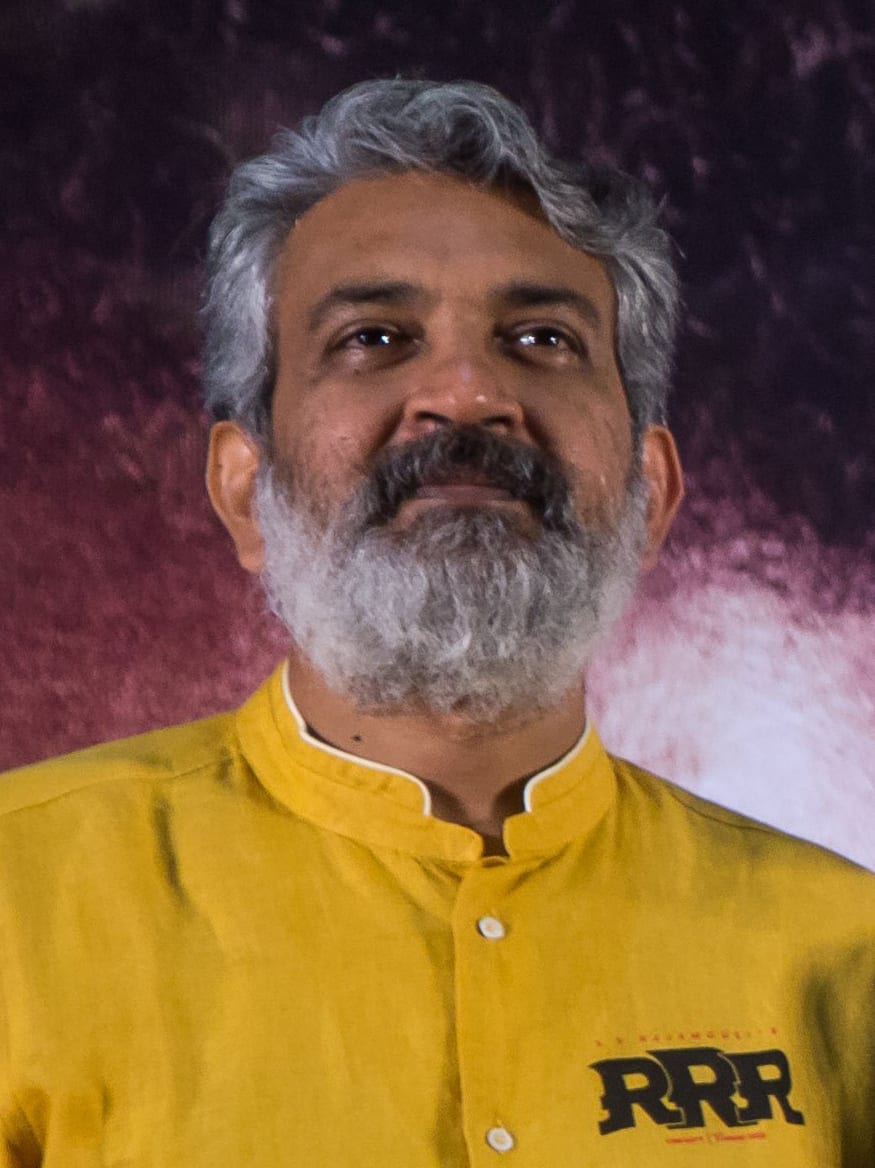
S. S. Rajamouli
Subject of this story
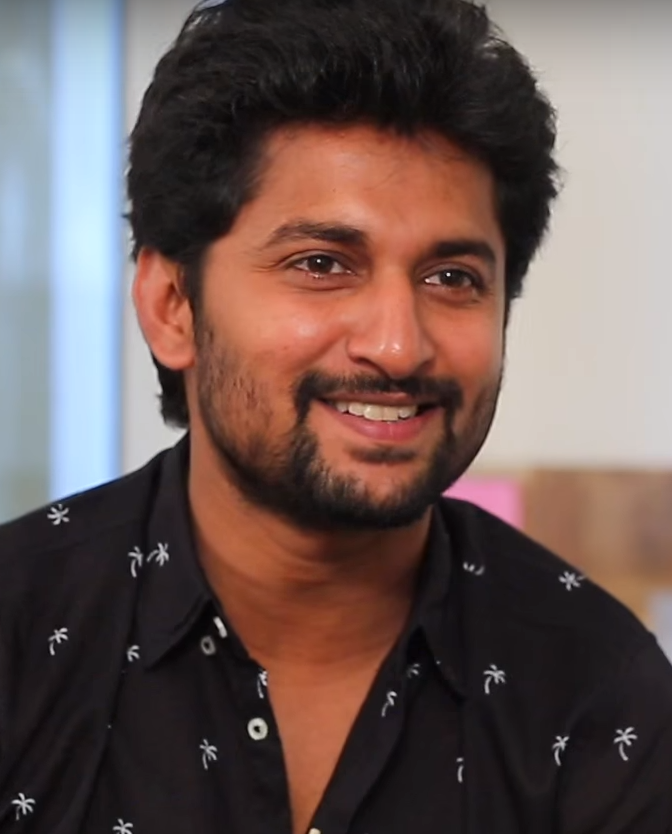
Nani
Mentioned in this story

Samantha Ruth Prabhu
Mentioned in this story
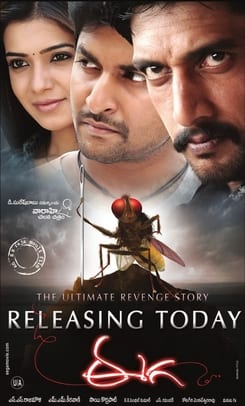

.png)
_(cropped).jpg)

Subject of this story
Source evidence
Rediff
Retrieved 14 September 2026 · original observation preserved
Source evidence
Rediff
Retrieved 14 September 2026 · original observation preserved
Source evidence
Rediff
Retrieved 14 September 2026 · original observation preserved
Source evidence
Rediff
Retrieved 14 September 2026 · original observation preserved
Source evidence
Wikipedia
Retrieved 14 September 2026 · original observation preserved
Source evidence
Wikipedia
Retrieved 14 September 2026 · original observation preserved
Source evidence
Wikipedia
Retrieved 14 September 2026 · original observation preserved
Image provenance
Dani Charles Silverscreen Media Inc. (https://silverscreen.in)Publication eligibility is controlled by its recorded rights decision.