Published
Rangasthalam’s realism was engineered: how Sukumar rebuilt Ram Charan, sound and the village together
A partially deaf hero, a reconstructed 1980s village, Godavari voices and a camera designed to stay inside the action all served the same plan: make a giant star look like he belonged to one specific place.

Rangasthalam looks natural enough that it is easy to forget how artificial that naturalism had to be.
The village is fictional. The period is reconstructed. Ram Charan was a modern commercial star deliberately stripped of the polish audiences associated with him. His character, Chitti Babu, is hard of hearing, which meant the film had to make sound itself part of characterization rather than background.
Sukumar’s 2018 film worked because those choices reinforced one another.
This is not a story about “deglamourization” as a publicity slogan.
It is about a director building an entire filmmaking system around a star he wanted audiences to see differently.
The hearing aid arrived after shooting had begun
Sukumar later admitted that even he was uncertain about one of the film’s most important choices.
He said that on the third day of shooting he asked Ram Charan to wear a hearing aid for Chitti Babu. Charan trusted him and agreed.
The detail matters because the hearing impairment became central to the character’s humor, misunderstandings, vulnerability and eventual emotional force.
It was not simply a costume accessory.
In another post-release interview, Sukumar said he had chosen Charan partly because he felt the actor had not previously been given sufficiently deep characterization. He believed a different kind of role could reveal something the star’s established commercial image had not.
That is a directorial hypothesis.
Rangasthalam became the test.
The village had to feel lived in, not decorated
Cinematographer R. Rathnavelu said he and Sukumar had wanted to make a village film with “real people” and settled on an 1980s feel because the period was personally familiar to them.
The production did not pursue realism by making the imagery plain.
Rathnavelu described aiming for a hyper-realistic visual texture and using a gimbal for a large part of the shoot so the camera could stay physically inside the action rather than observing from a distance with long lenses.
That combination is important.
The film is often remembered for dust, heat, lungis, canals and raw village surfaces. But the camera strategy was dynamic and technically controlled.
The roughness was designed.
Ram Charan’s body became part of the production design
The Indian Express reported Sukumar saying that putting Charan in a lungi and giving him the hearing-impaired Chitti Babu characterization was a deliberate attempt to pull him away from his familiar image.
The film depended on Charan accepting that loss of polish.
He had to look like somebody who belonged in Rangasthalam, not like a star visiting it.
Samantha’s Rama Lakshmi was treated similarly. Contemporary interviews describe her uncertainty about playing a rural character and Sukumar pushing her away from polished presentation.
The point is not that actors become “better” by looking less glamorous.
The point is that Sukumar aligned performance, costume, dialect, setting and camera movement around one coherent world.
Authenticity also came through voices
One of the less obvious decisions involved dubbing.
Cinema Express later interviewed dubbing artist Jyothi Varma, whose Godavari-region background helped her supply Samantha’s character with the local accent Sukumar wanted.
That kind of detail is easy to lose when a film’s success is reduced to box-office numbers or star transformations.
But language texture was part of the same design logic as the clothes and production design.
The village had to sound specific.
The commercial result validated an experiment without making it safe
The Indian Express reported that Rangasthalam grossed ₹100 crore within three days. That is a publication-reported historical figure, not an existing Genesis box-office claim, and it is not modelled here as canonical.
The success matters for a different reason.
Before release, the choices could have been described as commercial risks: period setting, rural dialect, a partially deaf hero, deglamorized stars, and a long dramatic structure.
After release, they became evidence that a large star film did not need to smooth away every local or idiosyncratic detail.
Sukumar’s most useful lesson was not “go rustic”
The wrong takeaway from Rangasthalam is that audiences wanted dirtier costumes, villages or 1980s nostalgia.
The stronger lesson is about coherence.
Sukumar chose a character constraint, a period, a place, a performance style and a visual grammar that all pointed in the same direction.
That is why the film belongs in a story about filmmaking.
Genesis can tell Chitram that Sukumar directed Ram Charan and Samantha in Rangasthalam.
The article explains what “directed” meant in practice.
In the database
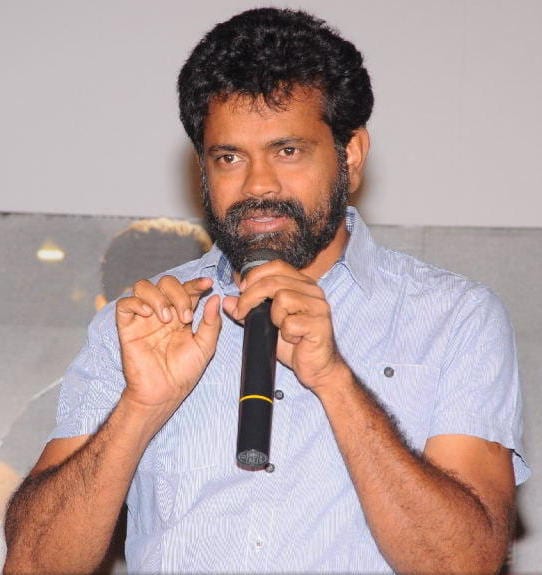


Sukumar
Subject of this story

Ram Charan
Mentioned in this story

_(cropped).jpg)
Samantha Ruth Prabhu
Mentioned in this story


Subject of this story
Source evidence
Cinema Express
Retrieved 14 September 2026 · original observation preserved
Source evidence
Cinema Express
Retrieved 14 September 2026 · original observation preserved
Source evidence
The Indian Express
Retrieved 14 September 2026 · original observation preserved
Source evidence
The News Minute
Retrieved 14 September 2026 · original observation preserved
Source evidence
Wikipedia
Retrieved 14 September 2026 · original observation preserved
Source evidence
Wikipedia
Retrieved 14 September 2026 · original observation preserved
Source evidence
Wikipedia
Retrieved 14 September 2026 · original observation preserved
Image provenance
Bollywood HungamaPublication eligibility is controlled by its recorded rights decision.