Published
Vyjayanthi Movies turned 50 by making its biggest bet look nothing like its first generation
From star spectacles to Yevade Subramanyam, Mahanati and finally Kalki 2898 AD, the Dutt family’s banner survived by letting a second generation alter the scale and kind of risks it was willing to take.
Kalki 2898 AD arrived in the same year Vyjayanthi Movies was celebrating fifty years.
That coincidence would be neat even if the film were ordinary.
It was not.
The banner founded by C. Aswini Dutt used its anniversary period to mount a multilingual science-fiction epic with Prabhas, Amitabh Bachchan, Deepika Padukone and Kamal Haasan — a project whose scale looked almost nothing like the company’s smaller films of the previous decade.
But the useful business-history story is not “old studio makes expensive movie.”
It is how a family production house survived long enough to let a second generation change its risk profile without discarding the identity of the first.
The company’s history is measured in very different kinds of films
In January 2024, Aswini Dutt explicitly connected Kalki 2898 AD to Vyjayanthi Movies’ 50th-year milestone.
He also pointed to earlier May 9 releases in the company’s history, including Jagadeka Veerudu Athiloka Sundari and Mahanati.
That pairing says a lot about the banner.
Jagadeka Veerudu Athiloka Sundari was a classic star-driven fantasy spectacle built around Chiranjeevi and Sridevi. Mahanati was a prestige biopic made decades later around the life of Savitri. Yevade Subramanyam, meanwhile, was a much smaller contemporary film.
All sit inside the same production lineage.
Genesis contains Yevade Subramanyam, Mahanati and Kalki 2898 AD as movie entities. It also contains Nag Ashwin, who directed all three, but the company entity itself is intentionally absent from Genesis’s sparse company table.
The second generation did not simply inherit the old formula
Swapna Dutt and Priyanka Dutt have spoken openly about the risks they took while producing their own slate.
In a 2023 Cinema Express interview, they described choosing theatrical release for Jathi Ratnalu during the pandemic despite having an attractive streaming offer. They framed their decision-making less as spreadsheet optimization and more as conviction in material they wanted audiences to experience.
That philosophy can sound romantic, so it needs context.
The sisters had already lived through failures as producers. In a 2019 interview around Mahanati, they talked about the difficulty of recovering emotionally and professionally after a dud and described Yevade Subramanyam as an important success on the way back.
The family company was not moving in a straight line from one blockbuster to another.
Nag Ashwin became part of the bridge
Nag Ashwin’s relationship with the Dutt family is central to the modern phase of the banner.
Yevade Subramanyam was his feature directing debut. Mahanati dramatically increased his scale. Kalki 2898 AD multiplied it again.
It would be simplistic to say Vyjayanthi’s revival is entirely Nag Ashwin’s work; producers choose, finance, organize and absorb risk, while films depend on many collaborators.
But the sequence is unusually clear.
The same banner that backed his debut eventually entrusted him with one of its largest projects ever.
Kalki put the anniversary into financial terms
Genesis preserves two opening-day claims for Kalki 2898 AD.
Vyjayanthi Movies reported ₹191.5 crore worldwide gross. Sacnilk reported ₹177.72 crore worldwide gross.
Chitram should preserve both. They are not averaged, and no winner is chosen here.
The disagreement is not the story here; Batch 01 already established Chitram’s editorial approach to competing opening-day claims through Pushpa 2.
For this business-history article, the numbers simply show scale.
A family production house that had spent the previous decade moving between modestly scaled films, prestige dramas and commercial experiments was now operating at a level where opening-day claims alone approached ₹200 crore worldwide.
Fifty years is not a single business model
That may be the most useful way to understand Vyjayanthi Movies.
Longevity did not come from producing the same kind of Telugu movie for five decades.
The company moved through eras, stars, formats and generations. Its younger producers built a slate that included small films and risky theatrical choices. Its founder remained associated with the banner. Nag Ashwin’s growth occurred inside that environment.
Then Kalki used the 50th-year milestone as a statement of maximum ambition.
The history is not clean enough to be mythology.
There were failures, periods of lower visibility and projects that did not work.
That is precisely why the 2024 moment matters.
A production house does not survive fifty years by never being wrong.
It survives by being able to place another bet.
In the database
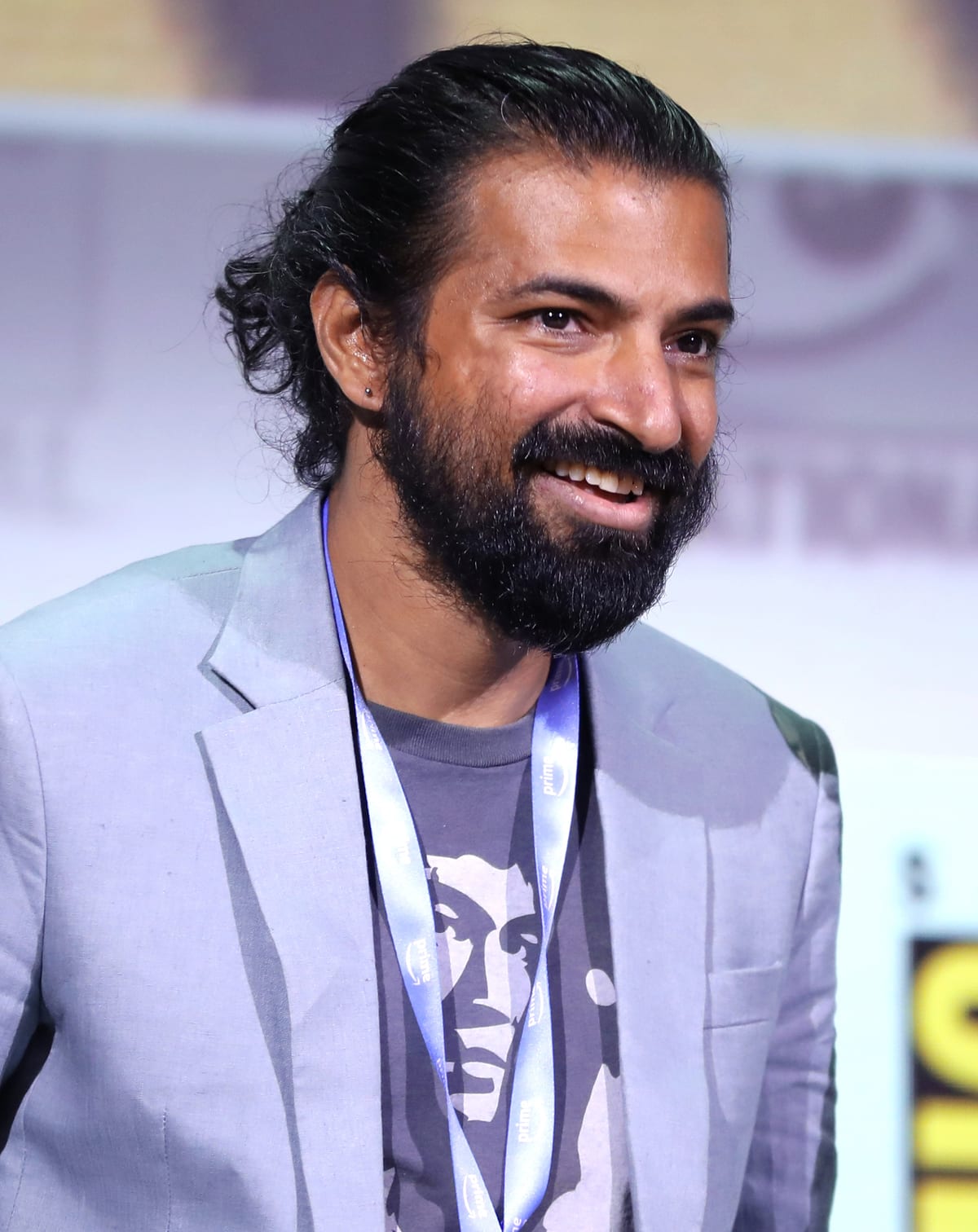
Nag Ashwin
Subject of this story

Subject of this story

Mentioned in this story



Mentioned in this story
Source evidence
Cinema Express
Retrieved 14 September 2026 · original observation preserved
Source evidence
Cinema Express
Retrieved 14 September 2026 · original observation preserved
Source evidence
Sacnilk
Retrieved 14 September 2026 · original observation preserved
Source evidence
Sacnilk
Retrieved 14 September 2026 · original observation preserved
Source evidence
The Indian Express
Retrieved 14 September 2026 · original observation preserved
Source evidence
The Indian Express
Retrieved 14 September 2026 · original observation preserved
Source evidence
Vyjayanthi Network
Retrieved 14 September 2026 · original observation preserved
Source evidence
Wikipedia
Retrieved 14 September 2026 · original observation preserved
Image provenance
Gage SkidmorePublication eligibility is controlled by its recorded rights decision.